
Is it time to upgrade to a high efficiency boiler?
If your current boiler is costing more to run and struggling to keep up, upgrading to a high-efficiency model can improve performance and help lower energy use.

Why you can trust our content
We understand that the boiler industry can be confusing, with plenty of outdated or misleading information. That’s why we rely only on trusted, proven sources to guide our advice and installations:
At a glance
Your boiler is one of the hardest-working appliances in your home, quietly keeping your radiators warm and your hot water flowing day after day. But like any piece of equipment, it won’t last forever. If yours is ageing, running up your energy bills or breaking down more often than it should, it may well be telling you something.
Upgrading to a high efficiency boiler is one of the most impactful changes you can make to improve your home’s comfort, reliability and running costs. This guide walks you through the key signs to watch for, what modern boilers offer and how to decide if the time is right.
If you’d like a professional opinion tailored to your home, you can request a bespoke boiler installation quote from the team at OVRO.
What are the signs your boiler needs replacing?
There are several tell-tale signals that an upgrade is overdue. If your boiler is more than ten to twelve years old, it’s worth reviewing its performance. Older units tend to have lower efficiency ratings, meaning they burn more fuel to produce the same amount of heat as a newer model.
Other warning signs include:
- Frequent breakdowns or recurring faults
- Unusual noises such as banging, kettling or whistling
- Rising energy bills without any change in usage
- Inconsistent heating or slow hot water recovery
- A yellow or orange flame rather than a crisp blue one
- Visible corrosion or water pooling around the unit
If you’re recognising two or more of these, a replacement is almost certainly the more cost-effective path compared to ongoing repairs.
Let’s get started, which fuel powers your boiler?
Mains Gas
LPG
It just takes 60 Sec
And then you can book a free consultation
The real benefits of a high efficiency upgrade
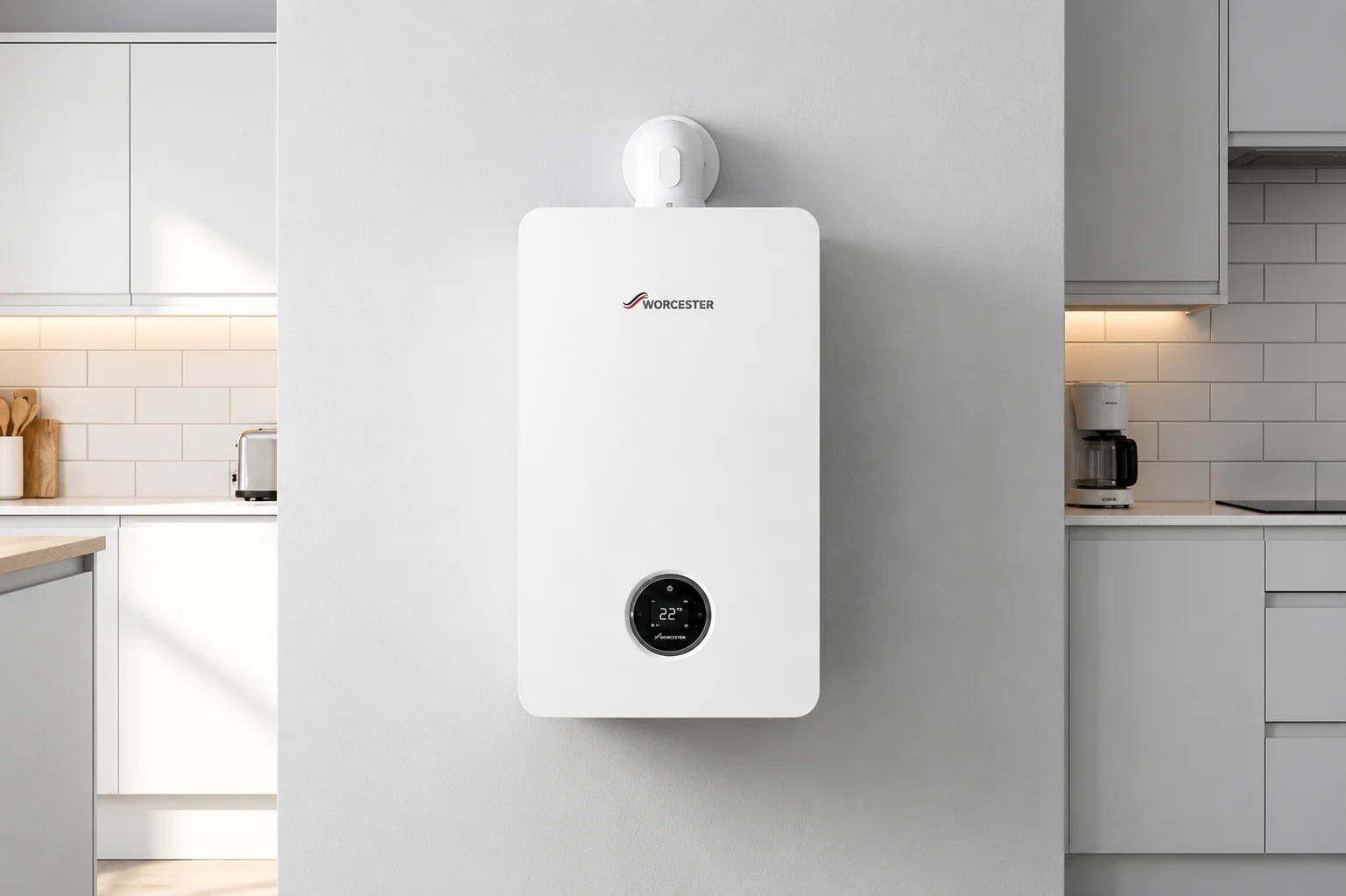
Modern condensing boilers are designed to capture heat from exhaust gases that older units simply waste. This makes them significantly more efficient and better suited to the demands of today’s households.
Beyond improved efficiency, upgrading brings:
- More consistent and responsive heating throughout your home
- Compatibility with smart thermostats and zonal controls
- A quieter, more compact unit that takes up less space
- Reduced carbon emissions, better for your household’s environmental footprint
- Fewer unexpected call-outs and lower maintenance frequency
A new boiler also adds genuine appeal if you ever plan to sell. Buyers and surveyors both take note of a recently fitted, well-specified heating system. For Manchester homeowners, where terraced houses and semi-detached properties dominate, a reliable and efficient boiler is a strong practical selling point.
Combi, system or regular: which type is right for you?
Choosing the right boiler type is just as important as deciding to upgrade in the first place. Each system suits a different kind of home and lifestyle.
A combi boiler heats water on demand, with no need for a separate hot water cylinder or cold water tank. It’s a popular choice for smaller homes and flats where space is at a premium. A system boiler works alongside a hot water cylinder, making it a better fit for larger households with higher simultaneous hot water demand. A regular boiler, sometimes called a heat-only or conventional boiler, pairs with both a cylinder and a cold water tank in the loft, and tends to suit older properties where the existing pipework is already configured for this setup.
The right choice depends on your property size, the number of bathrooms and how your household uses hot water day to day.
| Boiler Type | Best Suited To | Hot Water Storage Needed | Space Required |
|---|---|---|---|
| Combi | Smaller homes, flats, 1–2 bathrooms | No | Minimal |
| System | Medium to large homes, multiple bathrooms | Yes (cylinder only) | Moderate |
| Regular | Older or larger properties with existing tank setups | Yes (cylinder and tank) | More significant |
Speak to a qualified boiler fitter to confirm which system suits your property before making a decision.
What happens during a boiler installation?
Understanding the process helps you know what to expect and plan accordingly. As a reputable company, we always begin with a proper assessment of your home before any work begins, reviewing your existing pipework, flue position and heating demand.
The physical installation typically follows these key steps:
- Preparation and isolation: Your engineer will safely isolate the old boiler from the gas and water supply and drain down the existing central heating system.
- Removal of the old unit: The existing boiler is professionally disconnected and removed. If you are converting boiler types (e.g., system to combi), this is when any redundant components like the hot water cylinder or cold water tanks are also removed.
- Pipework and flue installation: The new boiler is positioned, and the necessary pipework connections for gas, water, and heating flow and return are made. The new flue (which expels waste gases) is installed, usually through the nearest external wall or roof.
- Wiring and controls: The new boiler is wired into the home’s electrical supply, and the heating controls (thermostat, timer/programmer) are installed or connected. This often involves connecting a modern smart thermostat for optimal efficiency.
- Commissioning and testing: The system is refilled, bled of air, and pressure-tested. The engineer then commissions the boiler, a crucial step that involves firing it up and running checks to ensure it is operating safely and efficiently according to the manufacturer’s instructions.
- Certification and handover: Once the engineer is satisfied, they will clean up, remove all waste, and issue the Gas Safe Installation Certificate. They will also register the boiler with the manufacturer for its warranty and demonstrate how the new controls work.
At OVRO, installations across Manchester and the wider North West are typically completed within 7 days of enquiry, with Gas Safe-registered engineers handling every step of the process.
Frequently asked questions
How long does a boiler installation typically take?
For a straightforward like-for-like replacement, a boiler installation is usually completed within a day or two. More complex jobs, such as converting from a system to a combi or repositioning the boiler, may take slightly longer. Your engineer will give you a clear timeline during the survey stage.
Do I need to be Gas Safe registered to fit a boiler?
Yes. In the UK, only Gas Safe registered engineers are legally permitted to fit, repair or service gas boilers. Always ask to see your engineer’s Gas Safe ID card before any work begins. At OVRO, all boiler engineers are fully Gas Safe registered.
Can I spread the cost of a new boiler?
Yes. Finance options are available that allow you to spread the cost across manageable monthly payments. OVRO offers flexible finance through Phoenix Finance, including repayment terms from 3 to 10 years at 10.9% APR, making it easier to upgrade without a large upfront payment.
Final thoughts
An ageing or inefficient boiler costs you more to run, breaks down more often and simply doesn’t deliver the reliability a modern home deserves. Upgrading to a high efficiency unit is a practical, well-considered decision that improves comfort, reduces running costs and gives you greater peace of mind through the colder months.
If your boiler is showing any of the signs discussed in this guide, now is a good time to explore your options. OVRO provides boiler installation across Manchester and the surrounding North West, with Gas Safe registered engineers, transparent pricing and installations completed within 7 to 14 days. Get in touch with the team today to arrange your bespoke quote.
Related articles
Let’s get started, which fuel powers your boiler?
Mains Gas
LPG

Smarter homes. Simpler installs. No surprises.
Services
Company
Contact
We Accept

Terms & Conditions | Privacy Policy | Cookie Policy | Sitemap
© 2026 OVRO All Rights Reserved. | Powered by We Build Trades 2026

Fusion Elec Ltd (Financial Services Register No. 991997) and Fusion Gas Ltd (Financial Services Register No. 930719) are Introducer Appointed Representatives of Phoenix Financial Consultants Limited (Phoenix). Phoenix is a credit broker, not a lender. Phoenix is authorised and regulated by the Financial Conduct Authority (FRN: 539195), and offers finance from its panel of lenders. All finance subject to status and credit checks.